



A recent victory in the fight to protect our children from bullies in schools and on the Internet could become worth nothing more than the paper it is printed on.
The final amended version of L.D. 1237, “An Act To Prohibit Bullying and Cyberbullying in Schools,” passed both the House and Senate this week. Unfortunately, it is not funded.
Additional Photos
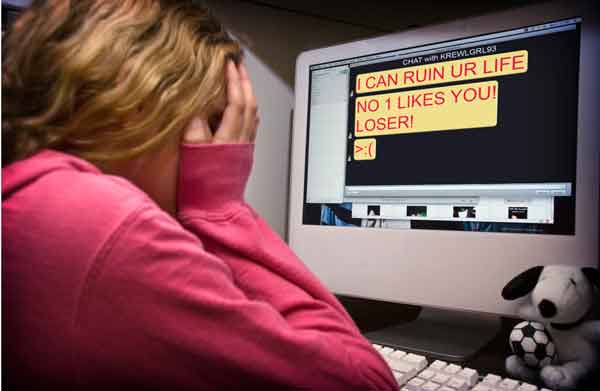
One final vote is needed to give the law its teeth. If two-thirds of both House and Senate vote to pass the mandate preamble, the commissioner of education and the local school districts will be required to follow the policy using mostly local funds. Without a two-thirds majority, however, they aren’t required to do anything.
This bill requires the commissioner of education to develop a model policy to prevent bullying and cyberbullying and discipline offenders, and to disseminate that policy to school superintendents by Feb. 15. The law would require school districts to then adopt their own policies that address reporting, investigating, risk assessment and discipline regarding bullying, be it online or in person.
Bullying has always been a problem in schools, and we know that victims can experience negative academic, psychological, physical, developmental, social and emotional outcomes.
Two areas make this an important bill:
* It provides a detailed and exhaustive definition of what constitutes bullying. The complete text can be found at www.mainelegislature.org/legis/bills /bills_125th/billtexts/HP092801.asp.
* It clearly addresses the question of when it’s a school’s responsibility to monitor students’ conduct when they are at home or on the Internet. This has been a hot-button issue, and schools have struggled to address it.
Basically, the law says that if the bullying, whenever or wherever it takes place, has a negative impact on a student’s ability to perform academically, participate in everything his or her school community has to offer, and feel safe doing it, the school has an obligation to get involved.
As the prices continue to drop for Internet-ready smartphones, more children will be “connected” at younger ages.
Kids today have never known a time when they didn’t have instant messaging, cellphones, texting, email, video chatting, readily available cameras or the Internet in the palm of their hands. These technologies give children greatly increased access to their peers.
The immediacy with which they can communicate, coupled with the relative impersonality of online interactions, puts them in difficult and sometimes dangerous positions.
According to ConsumerReports.org, in May there were more than 7 million Facebook users under the age of 13 and 5 million under 10. Students are able, and often willing, to share personal information and images with people online — sometimes without really knowing who the people are.
In an age of decreased parental supervision, and a rapidly changing technological world, keeping up with kids’ online behaviors, personas and personalities presents many challenges.
In my opinion, we are not faced with a problem of kids being exposed to too much technology. Rather, I believe it is a problem of not enough intervention, education and awareness by parents and schools.
Internet-ready hand-held devices and social networking are a part of everyday life.
Using this powerful technology, people soon will communicate in ways and at levels that we cannot even imagine.
In the last few years, we have been stunned by stories of online bullying and harassment leading children to kill themselves. Those suicides and other violent acts have left many parents and educators reeling for solutions.
With power comes responsibility. With opportunity comes risk. We can no longer lament about a world when people just talked to each other in person or when kids played outside all day.
Complacent nostalgia is not an option if we want our children to fully realize the benefits of technology and keep them safe at the same time.
To do this, parents, educators, legislators and community members alike are going to have to take an active role in promoting digital citizenship and awareness.
As an unfunded mandate, one final vote still must be taken before the benefits of L.D. 1237 can be realized by our communities.
I hope Maine citizens who are concerned about the problem of bullying and cyberbullying will contact their senators and representatives and urge them to vote in favor of the preamble mandate to L.D. 1237, requiring school districts to follow the policy using mostly local funds.
Gabriel Schuft of Hope is a middle-school teacher and is working toward a master’s degree in social work at the University of Maine.
Send questions/comments to the editors.
