



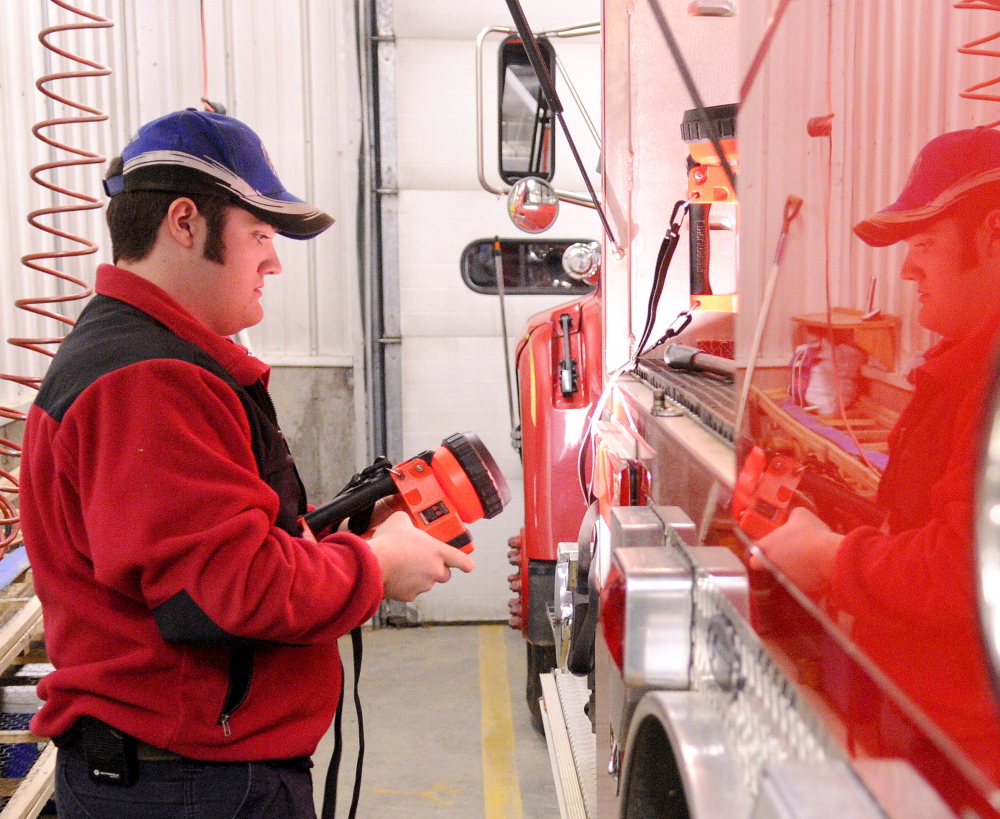
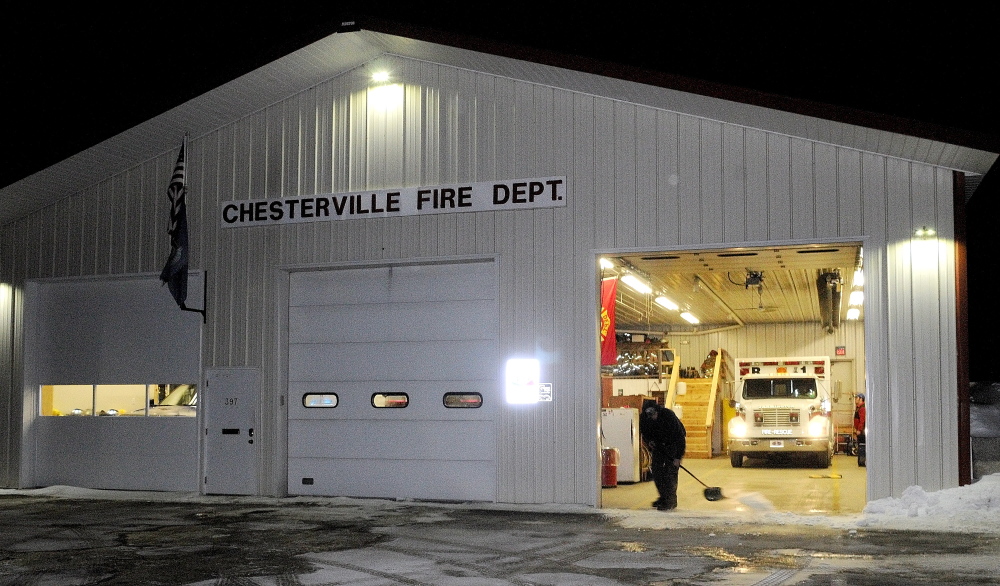
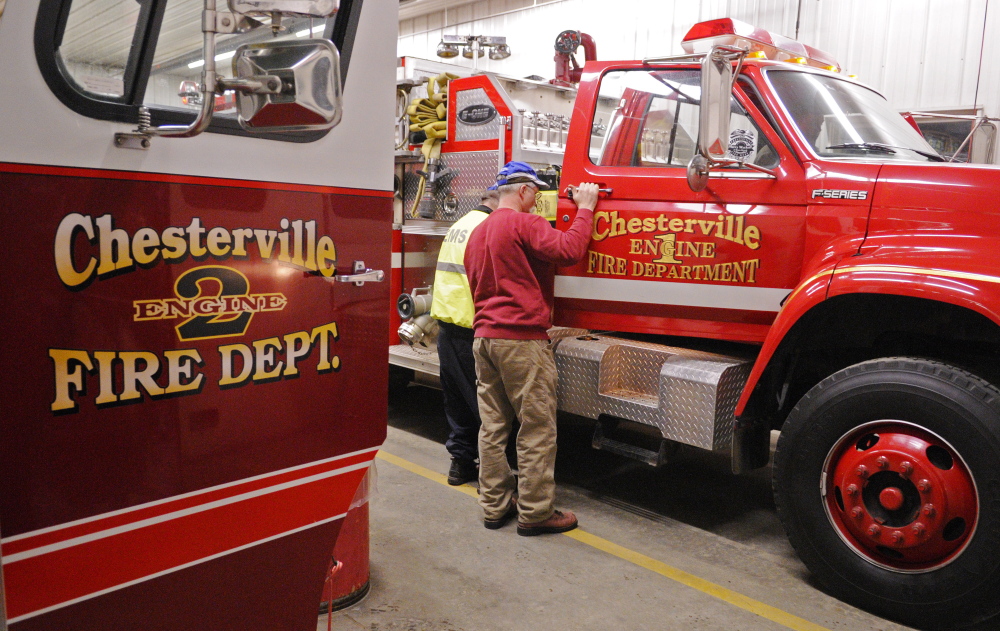

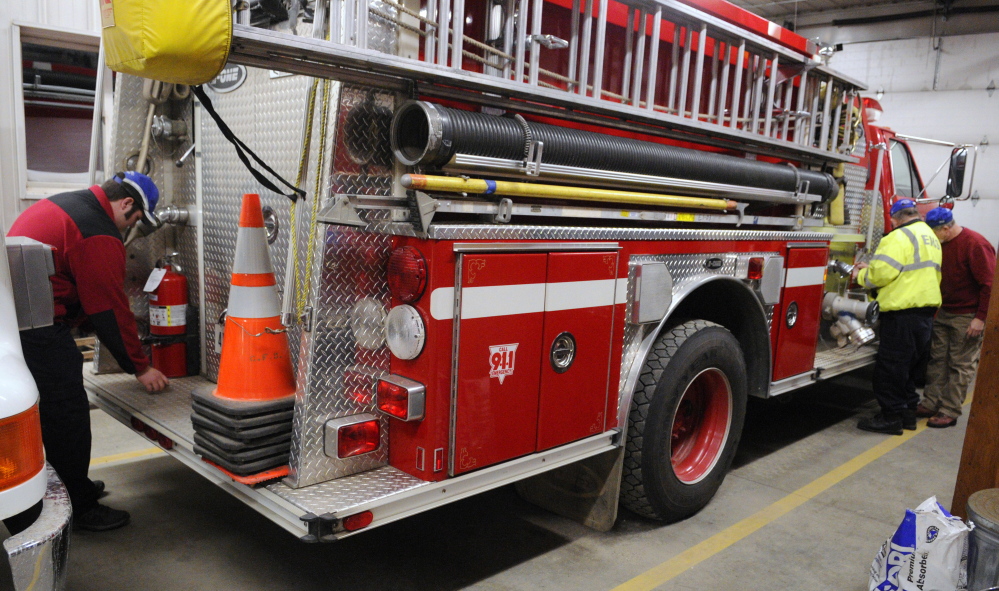
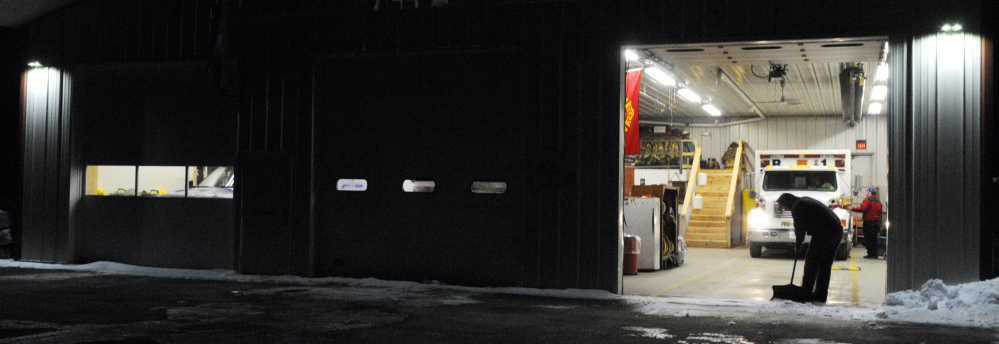
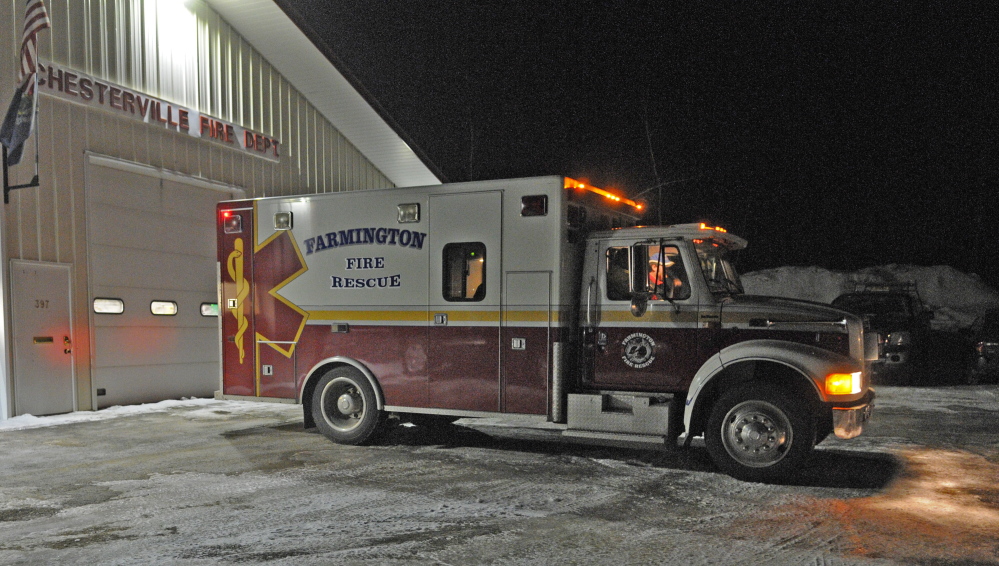

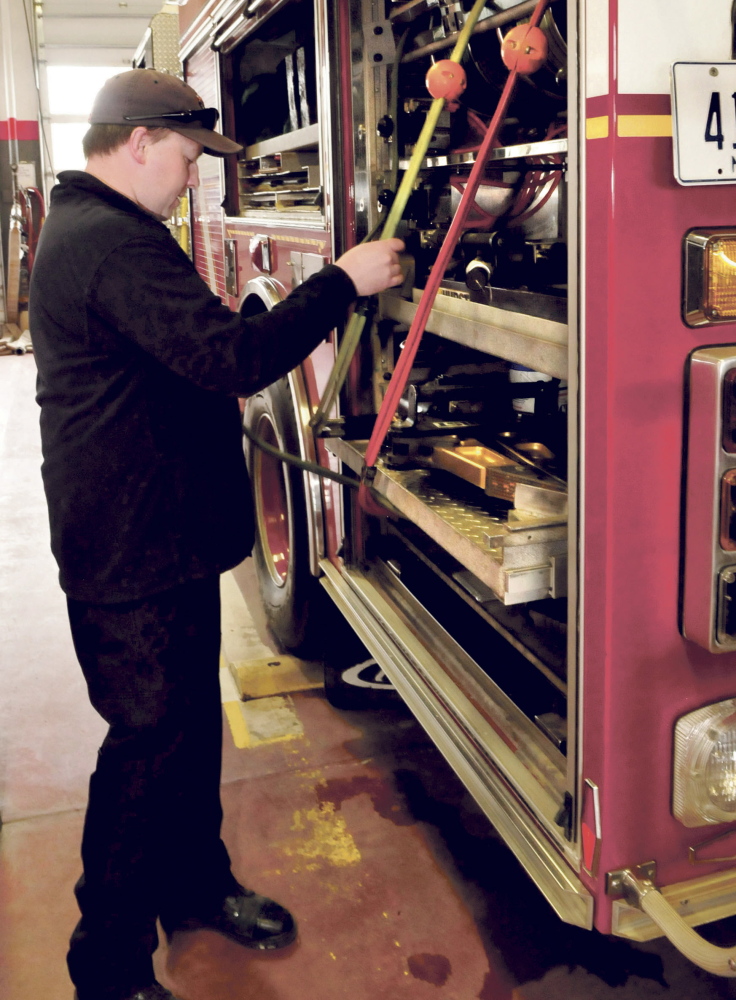
Only four firefighters on the China Village Fire Department are trained to enter a burning building. The department needs at least six to launch an interior attack to put out a fire.
When Fire Chief Tim Theriault looks at his roster of 22 volunteers, he sees only four under the age of 50; he had 15 or more volunteers under age 50 a decade ago.
Read: Firefighter Training Compliance Directive


Some on the roster now are in bad health. Others, between jobs and family, have no time for needed additional training.
And many of the volunteers, while willing, aren’t able.
“I got guys who are claustrophobic. They can’t put a mask on. But you don’t want to throw them away, because they are willing to help,” he said.
The result has been the department may not get enough manpower on scene to knock a fire down before the structure is lost while waiting for mutual aid assistance from other towns.
Across Maine, a dramatic decline in the number of volunteer firefighters, particularly young ones, threatens the ability of small departments to provide essential public service.
And while the number of on-call firefighters is decreasing, the demand for fire and rescue services is increasing.
The clash of increased demand with fewer available staff is not at a crisis level — yet.
“We’re heading in that direction if we don’t see a change,” said Ken Desmond, president of the Maine State Federation of Firefighters. “That’s why we’re trying to do something before it gets to that point.”
The China Village department, like other small fire departments, can’t slow the steady decline in residents volunteering to join, but can’t afford full-time staff. A lack of money, including a decline in state revenue sharing money and fewer 9/11-inspired grants, has tightened municipal budgets.
In central and western Maine towns, unlike the more populous communities in the southern part of the state, most departments have little to no full-time staff, and the declining ranks of volunteer firefighters is challenging towns’ ability to offer an essential public service.
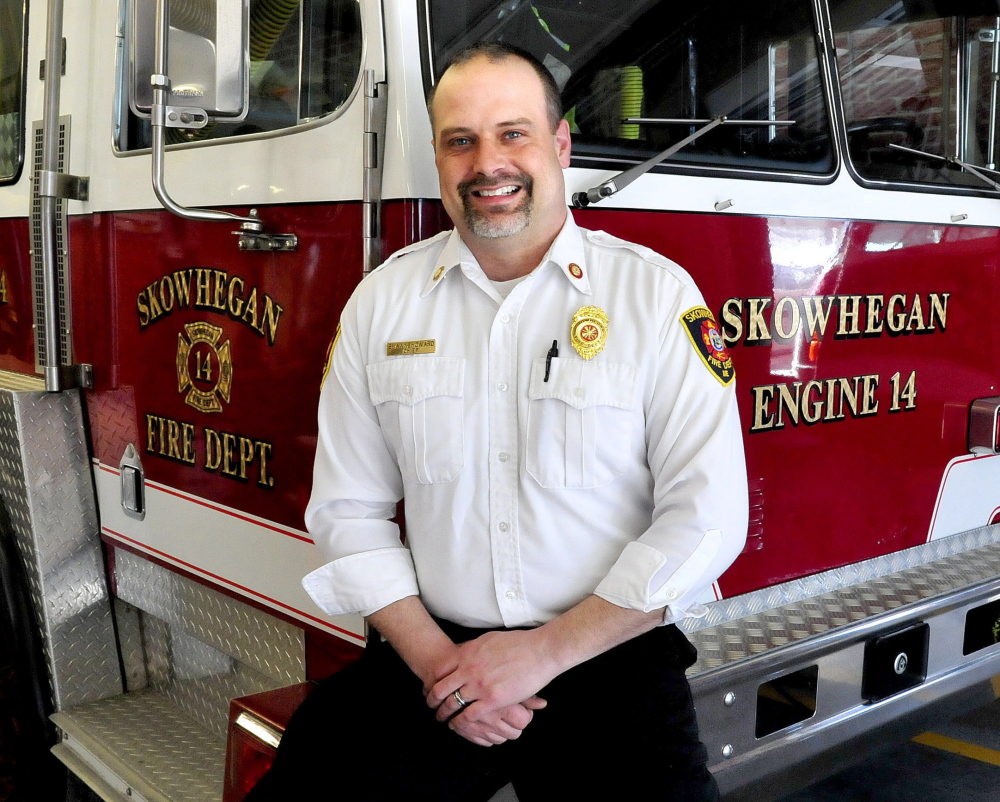
The Madison and Skowhegan departments, for instance, have struggled in recent years to maintain a call roster of 22 volunteer firefighters in addition to eight who are full-time, said Chief Shawn Howard. Eleven of those firefighters are shared between the two towns.
Two or three decades ago, there were waiting lists for the volunteer roster, he said.
On weekends or nights when the departments are short-handed, he said, few firefighters who can initially respond may have to do exterior work until enough mutual aid backup arrives for an interior attack on a building. That could mean waiting for two, three or four outlying departments to arrive.
Adding to the problem is that firefighters are performing more services, training and equipment requirements continue to increase and cost more, and fires burn hotter and faster than they did in the past.
They are performing more services, like emergency medicine for the state’s aging population.
And all the while, the firefighters are aging, too.
“The public is looking for firefighters to do more with less,” said Clyde Ross, the Farmington Fire Department’s deputy chief. “And the worst part is, we’ve accepted that.”
GROWING CHALLENGES
For the first time in 28 years, the majority of volunteer firefighters in the U.S. are over the age of 50, according to a firefighter profile released in November by the National Fire Protection Association.
At the same time, the profile shows the cost of fighting fires steadily growing.
In 1980, U.S. municipalities spent about $5.7 billion on fire services, according to the fire protection association. In 2011, the latest data available, municipalities spent $42.3 billion on fire protection services. Even adjusted for inflation, the cost of firefighting services in the U.S. has more than doubled since 1980.
Volunteers make up about 70 percent of the U.S. fire service, but in Maine about 93 percent of fire departments are either entirely or primarily staffed by volunteers, according to the Maine State Federation of Firefighters.
Volunteer, or on-call, firefighters often get a stipend or wage, said Desmond. Departments, however, are finding that the money offered isn’t enough to man a fire department.
Maine had about 12,000 firefighters in the early 1990s, said Desmond, but the number has dropped to “at best, 8,000.”
Desmond is among fire officials in western and central Maine trying to find a way to increase recruitment and retention, and make the reality of the numbers work with the reality of the challenges and expectations facing their departments.
Skowhegan and Madison fire departments are working to share what services they can.
A group of Franklin County towns is holding ongoing meetings looking for opportunities to collaborate on grants, training and group purchases.
The recently formed Female Firefighters of Maine is trying to encourage women in firefighting.
Desmond’s organization got a grant from the U.S. Fire Administration earlier this month for a recruitment and retention campaign and last year ran a recruitment television commercial.
There are also several bills before this year’s Legislature that address compensation for volunteer firefighters, including two co-sponsored by Theriault, who is also District 79’s state representative.
‘EVERYONE’S TOO BUSY’
Fire department officials across the region say shifting social patterns are largely to blame for the lack of interest in becoming a volunteer firefighter. People work long hours away from their town and can’t respond to day calls. They are more involved with their families and their kids’ activities. Both parents often work outside the home.
Farmington’s Ross, at 78, is also a member of the town budget committee, Masons, Farmington Village Corporation, Franklin County Emergency Management Agency and Franklin County Firefighters Association. He said he sees a general decline in interest in civic involvement.
“This did not happen overnight. This has taken a generation to work on,” Ross said. “I don’t think the younger generation wants to get involved.”
Theriault said older firefighters talk about feeling like they can’t leave their departments because they know the town’s needs and know there’s no one to replace them. Also a licensed EMT, Theriault has been on the China department for 28 years. The department has one firefighter who has been there since 1966.
Along with Ross, Farmington Firefighter Doug Oliver has been with the department for 51 years.
The Sidney Fire Department recently recognized retiring Bob Bacon, the former assistant fire chief, for 50 years of service to the department.
“We’re an aging bunch of old people and it’s not good,” said Theriault. “I cannot seem to recruit any young people for any reason whatsoever. Everyone is too busy.”
Perceptions that fire departments are “a good old boys club,” don’t help, Theriault said.
Nationwide, 3.4 percent of firefighters in 2012 were women, according to the latest data available by the National Fire Protection Association.
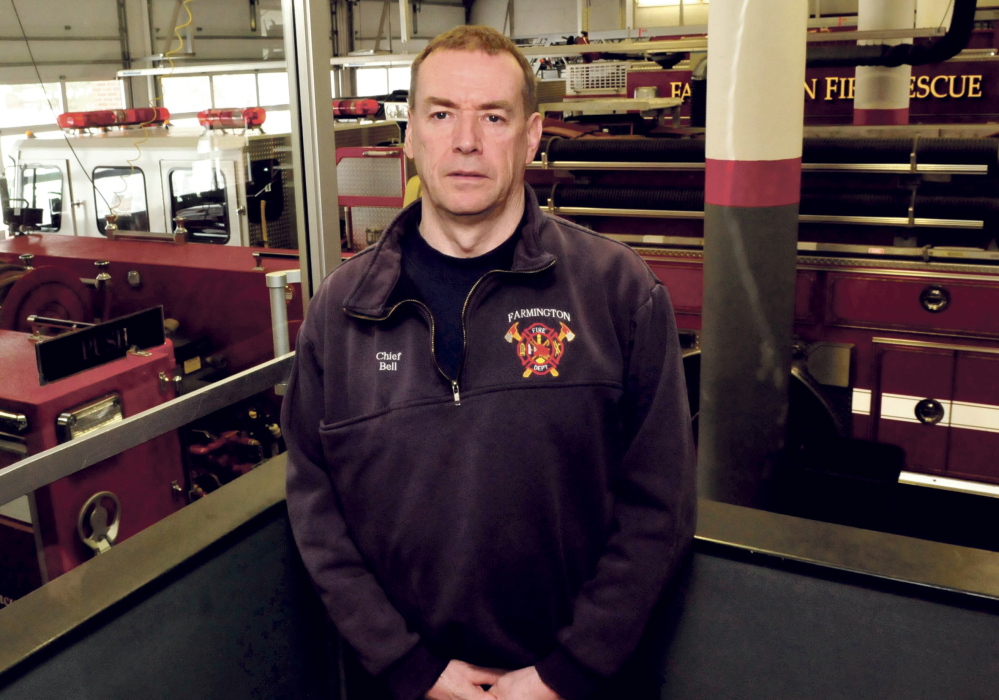
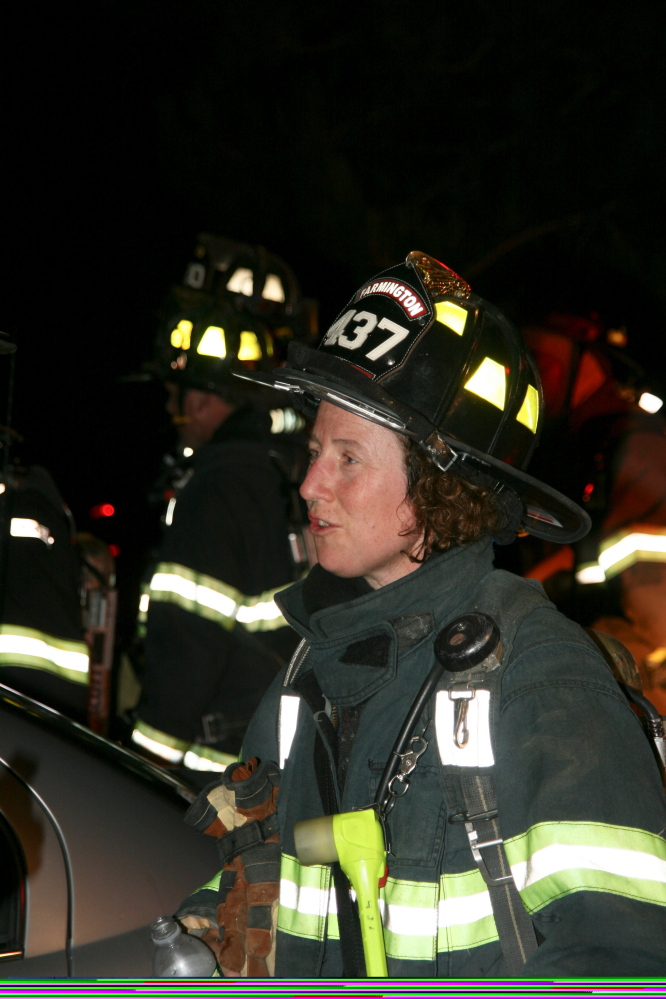
While Maine female firefighters are scattered throughout Maine’s departments, Farmington Chief Terry Bell said there doesn’t seem to be much interest from women. The department currently has one.
Joseph Hastings, 19, a lieutenant with the Chesterville Fire Department, said he understands that the time commitment is more than what many younger people can or want to deal with. He’s also a member of the Farmington Fire Department and attends training or meetings every Tuesday of the month.
“And if there is a fifth Tuesday, there’s more training,” he said. “I haven’t had a free Tuesday night in over a year and a half.”
LEARNING TO BE SAFE
Meth lab recognition training has been introduced over the last few years at Skowhegan and Madison Fire Departments.
After 2001, terrorism awareness training was introduced and departments started to teach WMD and bomb awareness.
Special teams train for ice water rescue in towns with lakes and rivers.
Is the natural gas pipeline coming through town? Firefighters have to train for gas line emergencies, too.
Low-angle rescue training. High-angle rescue training.
And the list goes on.
The amount of training required has increased over the years, a reflection of the greater role fire departments play in emergency and rescue services, changes in the science of fighting fires, changes in fire safety equipment and knowledge and a change in how fires themselves burn.
Firefighters need to respond to fires in a shorter amount of time these days because modern furnishings are often petroleum-based and burn hotter and faster than they did even a couple decades ago.
A fire that might have consumed a room in 20 minutes in the recent past would now spread through that same room in about three and a half minutes, according to Bill Guindon of Brunswick-based Maine Fire Service Institute, which directs training for the state’s fire departments.
Small town fire chiefs cite increasing regulation and training as one of the challenges to firefighting. It’s time-consuming, and that turns off new recruits and strains current firefighters.
Theriault said he understands how the regulation and training got to where it is today: Something bad happened and a new rule was made to prevent it from happening again.
“It’s all in the good nature of safety,” Theriault said. “For a full-time fire department? Great. They can handle any kind of regulation you put in front of them because they go full time. Volunteer fire departments don’t have the time.”
Phillips Town Manager Elaine Hubbard agreed, pointing out the same training required in the northern Franklin County town of 1,028 is the same training required in 30,000-resident, full-time fire department Bangor.
Hubbard said the town can’t keep up with the increasing mandates and training.
“We can’t afford it, but we can’t afford not to have it,” she said.
Bell, of Farmington, said that members of small departments have to be prepared, but it’s hard to motivate volunteers to repeatedly train for occurrences that happen infrequently — if ever.
“You don’t have a lot of those incidents,” he said. “It sounds terrible, but eventually you have to have something happen or you can’t just keep motivating people to train for something that never happens.”
Guindon said the demands of training and regulation started to increase in the 1970s when new research showed the number and causes of firefighter and fire-related civilian deaths.
Guindon, who got into firefighting 37 years ago, said firefighters used to learn informally and as fires happened. It wasn’t standard to wear oxygen masks, for instance.
“When most of us started out, it was just, ‘Follow me, and we’ll show you the ropes,'” he said.
He said the responsibility that a fire chief now faces, however, is too great to rely on that practice. Firefighters know more today about how to be properly protected on the road, about what type of safety gear is appropriate and what kind of hazards they could encounter.
Some 81 firefighters were killed in the line of duty across the country in 2014, and Guindon said the men and women in the fire service want to find ways to lower the number.
“Part of the reason for the changes is that we’ve learned how to be safer,” he said.
One of the most recent developments is that fire stations have adopted equipment to keep carcinogens out of uniforms. Firefighters are more likely to get cancer than the general population, and Guindon said carcinogens primarily spread, not at the scene of the fire as previously thought, but from the exhaust from the firetrucks getting into the air and latching on to uniforms.
Madison and Skowhegan departments, for instance, received a grant to install a hose to attach to the exhaust so it is filtered directly out of the fire station.
Howard, the fire chief of both departments, said the purchase was partly in anticipation that a regulation requiring the move would soon be coming. “Before we had that, every spring we would go and wash down the inside of the station walls and it was just black with soot,” he said.
THE COSTS
How much volunteer firefighters are compensated varies widely by each town. It’s a balancing act as the town determines how much it can afford compared to how little can be offered and still lure people to do the job.
Strong, a town of 1,200, and China, are among the few towns that don’t pay firefighters at all.
Many of the bigger towns have a full-time chief, but the rest of the crew is volunteer.
Chesterville, like the majority of towns with on-call firefighters, compensates firefighters to some extent. Chesterville firefighters get a lump sum for each quarter, which is divided among whoever came out for calls that pay period. It usually adds up to a little less than minimum wage for the amount of time put in.
When Hastings got his first Chesterville check, he was surprised. He wasn’t expecting it.
He’s aware he is one of the few recruits who felt that way about the pay.
“We’re kind of going through a struggle. We don’t have enough people because of that reason,” he said. “It’s getting to the point where people want money.”
In Farmington, voters agreed last year to increase the number of per diem firefighters to a rotating list of two or three firefighters at a time, who work shifts during the day, seven days a week.
Starting compensation for per-diem firefighters in Farmington is $8.50 an hour, with no benefits.
In 2007, Farmington started the per diem program because there were a few car accident calls when only one or two people responded, said Bell.
Bell said scheduled paid firefighters are in part needed because it’s hard to ask people to leave their jobs for a call. Farmington had 405 last year.
“It’s a commitment,” he said. “Years ago, when you had 100 calls, they could give a little bit of time to it.”
China has a population of 4,100 and three separate fire departments, with three different chiefs who each have their own budgets, but provide mutual aid to each other.
The town pays a total of $65,000 for the three departments. It also pays $85,000 for a separate rescue department, which is also staffed by volunteers.
Neighboring Benton, with a population of 3,000, doesn’t have a fire department, but pays Fairfield $165,000 a year to contract with their full-time department.
And whatever the amount appropriated for departments in town budgets, it has to be buffered with grants, donations and fundraising, like bean hole or spaghetti suppers. For instance, China gets money for daily operations, but has to raise money for things like truck purchases.
“When’s the last time you saw a police department holding a bake sale?” Farmington’s Ross asked.
Communities without fire departments may pay in other ways.
Caratunk used to have a volunteer department, but Selectman Liz Caruso said by the time she took office in 2006, it didn’t. The town’s population in the 2010 census was 69, and town officials say the year-round population is closer to 40.
But even at its highest, “Those 60 or 70 people (in town) include children and elderly. Plus it takes certification. It takes time. It takes effort. It takes good health,” she said. “You need a population base.”
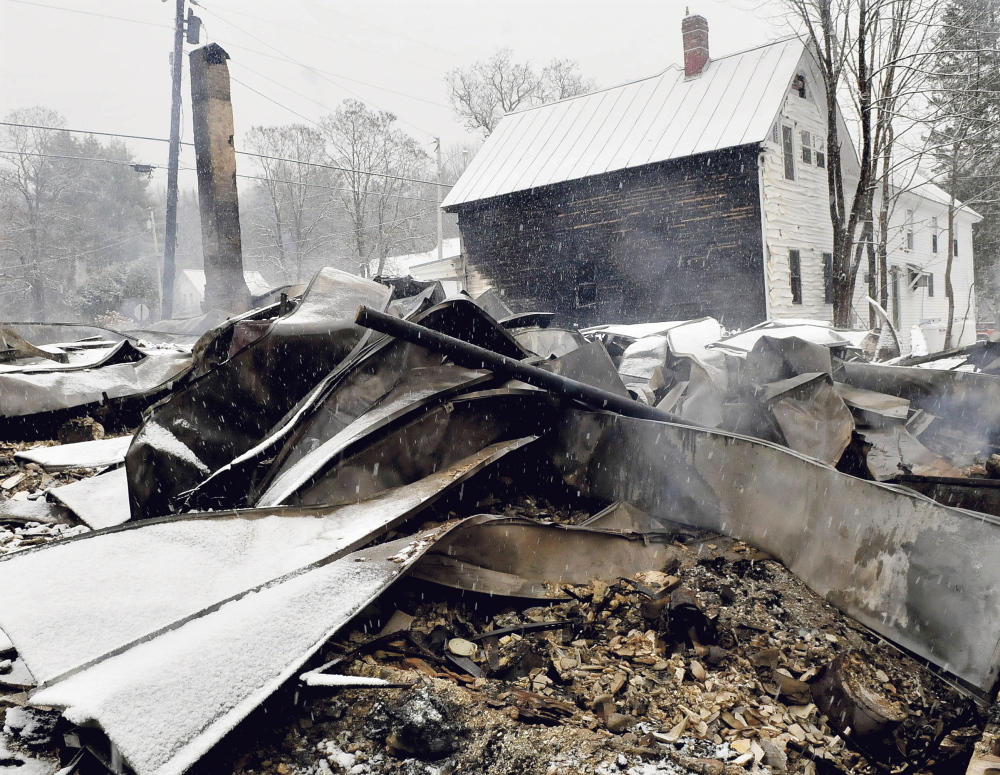
In November it took volunteers from Bingham, Solon, West Forks and Jackman nearly half an hour to get enough volunteers to a fire to begin fighting it, and by then it was too late to save the two buildings that burned to the ground. Firefighters did manage to save the town’s post office.
With no volunteer fire department and the closest other department a good 20 minutes away, insurance rates for homeowners in the area are high.
Fire departments across the United States are rated by Insurance Services Office Inc., a risk management and insurance underwriting company that weighs things such as the number of volunteer and career firefighters and age of equipment, among other factors, to decide on one to 10 rating for the towns.
“I’m sure our insurance isn’t as low as if we had a fire department,” said Caruso. But, she added, “We really have no choice.”
BOOSTING ROSTERS
If solutions aren’t found for the problems, firefighters say the shrinking number of on-call members means people and property will be put at risk.
Central Maine fire officials all were quick to cite a fire in Bridgton in early February in which only three people responded in the first 30 minutes of the response and the home was destroyed.
The deputy chief told WCSH 6 that the fire could have been knocked down in about five minutes, but took more than a half-hour and there weren’t enough firefighters for an interior attack.
Ross, of Farmington, said firefighters rely on mutual aid from other towns more and more, but the Bridgton fire showed even pooling won’t always be enough.
“In 15 more minutes you might have 10 more firefighters but the fire doesn’t care if you need 15 more minutes. It’s not going to wait,” Ross said.
Desmond, of the Maine State Federation of Firefighters, said selectmen and town councilors look at the Bridgton fire and worry that it’s something that’s going to start happening a lot more frequently.
Desmond said his organization is banking on better recruitment and retention strategies to change the negative trends in fire services.
The organization is due to hear back soon on a federal American Fire Act grant for all the New England states that would pay to train up to 100 firefighters per state. Whatever the outcome of the grant, Desmond said the goal is to make now the time to fight the downward trend and boost the rosters of local fire departments.
The Maine State Federation of Firefighters lobbied last session to push for a financial rewards program for those with longevity in a volunteer department. The Legislature passed it, but it was vetoed by Gov. Paul LePage. The group is lobbying for it again this year. In his veto message, LePage said the program was well-intentioned, but financially unwise and said it “expands state government at a time when the taxpayers of Maine can least afford it.”
The legislation called for the state to put money into retirement accounts for volunteer firefighters and would cost about $300,000 to $400,000 a year, according to Bill Vickerson, legislative representative for the federation. The move would allow towns or cities to match the state money, and give volunteers an incentive to stay with a fire department longer. Vickerson said the money spent would be a significant savings compared to hiring full time staff.
China Village’s Theriault is co-sponsoring two bills that would ease the financial regulations on smaller fire departments. A Republican, he represents District 79, which includes parts of Albion, Benton, China and Unity Township.
A bill he co-sponsors, introduced by Sen. Scott Cyrway, R-Benton, would allow tax increment financing money, which is normally reserved for business development, to be used for emergency services like fire departments. The bill, L.D. 165, also aims to allow fire departments to receive their payments from towns in lump sums.
He is also co-sponsoring a bill with Speaker of the House Mark Eves, D-North Berwick, L.D. 500, that would allow towns to give volunteer firefighters who don’t get other compensation from a town up to $750. That bill was referred to the Committee on Taxation on Tuesday.
“I’m throwing darts at the board, seeing if something sticks,” said Theriault. “We have to try something.”
WHAT’S WORKING
The immediate dilemma of having less money and fewer firefighters when fire and rescue operations have more responsibilities than ever before is not an easy one to grapple with in a small community.
Ross said increasing taxes to pay for more career firefighters could be the only option many towns will be left with if more residents don’t volunteer to be on-call.
With town meeting voters unlikely to approve big budget hikes, some communities are looking at consolidating departments or functions with area towns.
Regionalization, though, isn’t an easy sell. Efforts over the past decade, most notably with school districts and county jails, have left area residents with a bad impression, many failing to contain rising costs while ceding some local control.
Hubbard, of Phillips, said she is not a fan of regionalizing fire services in any way, but there is mounting pressure because of finances and manpower.
“It may come to the point where (we) might have to,” she said.
Other Franklin County fire departments have been meeting to discuss consolidating and as a result of those meetings recently made a combined purchase of some gear.
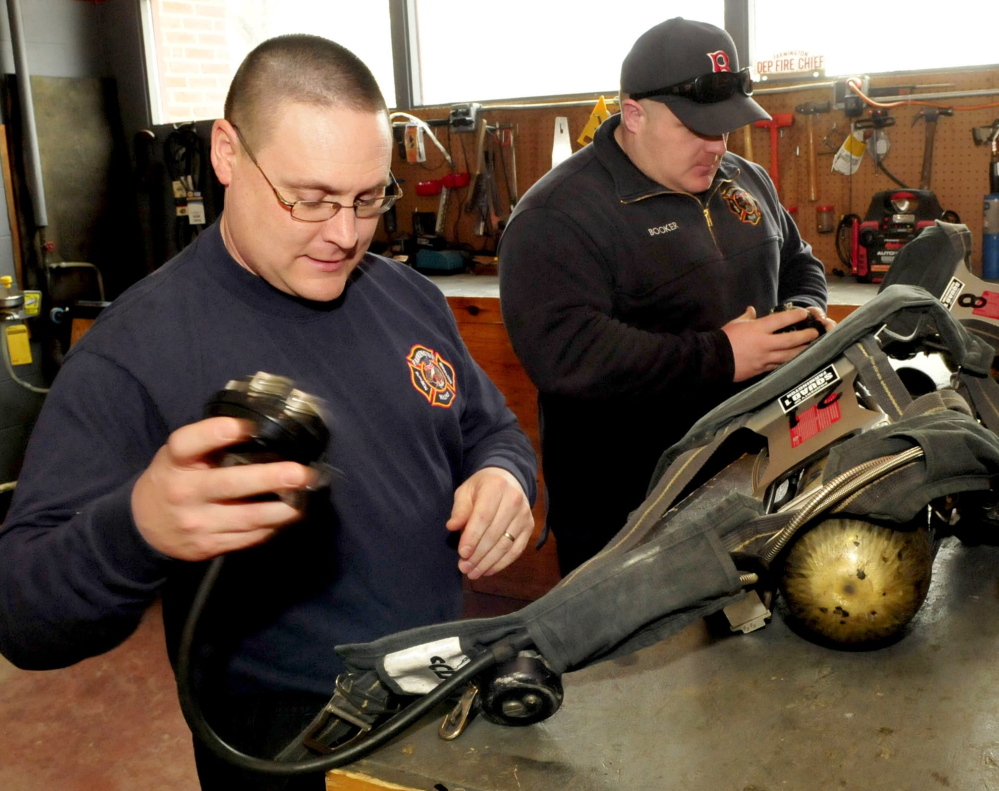
The departments also share personnel — for instance, Farmington’s Kyle Ellis is deputy chief of the Wilton department and Mike Booker is fire chief in nearby Jay.
Howard, the chief in Skowhegan and Madison, said the challenge is keeping up morale by not forcing integration on firefighters and allowing the pride the crews have in their community department to be shared rather than merged.
“The number one asset we have is the firefighters themselves. It’s the people,” Howard said. “They take pride in their department, they take ownership in their department. One of the risks you have is people feeling like they are losing that individuality. I don’t want to take that away. I want to continue that pride.”
In tiny Caratunk, which depends on other towns to fight its fires, Selectwoman Caruso stressed that the need for volunteers is essential.
“One thing I will say is that all these volunteer firefighters, they do a tremendous service to all of our rural areas,” she said. “They sacrifice their time. They go through training. They’re there when you call.”
Kaitlin Schroeder — 861-9252
Send questions/comments to the editors.
