
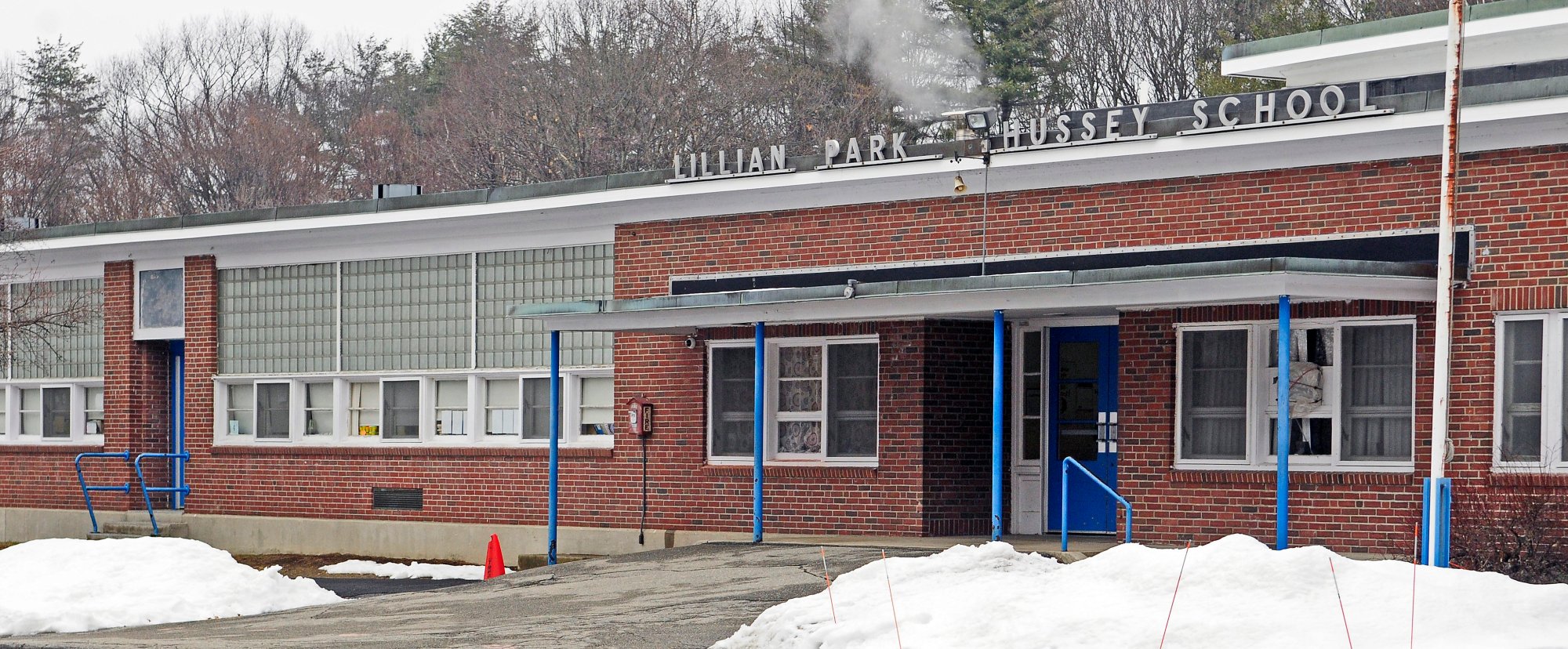

This November, Augusta residents will vote whether to approve funding for the $53 million renovation of Farrington Elementary School, resulting in the closure of the Lillian P. Hussey Elementary School.
As school enrollment is projected to decline in Augusta over the next decade, the proposed plan would consolidate elementary students who live east of the Kennebec River into the renovated Farrington building.
While plans for the consolidation have been in the works for several years, the matter is finally landing on the ballot for Augusta voters. Here are some key details to know about the project before heading to the polls.
WHY IS THE HUSSEY SCHOOL CLOSING?
The Hussey school was built in 1954, making it the oldest of the city’s four elementary schools. It has been on a list for reconstruction for more than 10 years, said Augusta Superintendent Mike Tracy.
Hussey was selected to be replaced in 2017, but the pandemic eventually halted progress, Tracy said. The Department of Education approved funds for Hussey’s replacement in 2023.
The school department is opting to close Hussey rather than replace the building as a result of projected enrollment declines over the next 10 years. Tracy said it would be a more efficient model to consolidate students under one roof, rather than continue operating four schools as the population continues to decrease.
Farrington, built in 1988, was selected for expansion over Gilbert Elementary School, Lincoln Elementary School and Cony due to a combination of factors, including current building conditions, available land and feasibility and cost.
WHAT’S NEXT FOR THE HUSSEY SCHOOL?
The school department does not yet have official plans for the Hussey school building if students transition to the expanded Farrington School. The building is owned by the city, so it would be up to city officials to make a decision in the future, Tracy said.
WHAT WILL THE PROJECT COST?
The projected cost of $53,571,590 will be fully funded by the state with no cost to Augusta taxpayers, if the November referendum passes.
The project funding was approved before July when a new law went into effect requiring school districts looking for state-funded construction to help pay for it with a local share. Tracy said the project could be the last one to be 100% state-funded before the law changed.
“It makes the most sense financially to take this project on now because if the voters decline to do it, they’re still on the hook for replacing the Hussey school, because that building is becoming less and less usable,” Tracy said.
Voters will choose whether to borrow the $53 million for the project in Question Two on the ballot. If the referendum does not pass, the school district would likely have to apply for the funding again under the new rules, adding a new local cost to the project.
However, the school department is also hoping to raise $1 million to fund upgraded equipment, such as playground equipment or a larger kitchen freezer, as state-funded school construction projects are only built to the state’s minimum standards for things like equipment.
WHAT IS THE TIMELINE FOR CONSTRUCTION?
If funding is approved by voters, construction would begin in the summer of 2028 and finish in the summer of 2030, allowing students to start at the new school in the fall of 2030.
Students at both schools will still be able to attend school during the construction period, as it will be completed in phases. Parts of the Farrington School may be closed off during the school year while undergoing construction, but spaces students need to access will be redone during the summer, so school operations are not interrupted.
The Farrington expansion would add 32,750 square feet to the current 48,000-square-foot building and include 19 new classrooms and updated existing classrooms, six classrooms for universal pre-K, a new science technology engineering and math learning space and a new cafeteria, among other building improvements.
The expanded school would accommodate approximately 525 students in pre-K through grade 6.
“I think it’s an opportunity to have a brand new facility that’s modern,” Tracy said. “It’s going to be a wonderfully built facility that will help us engage families well, well into the future.”

Comments are not available on this story. Read more about why we allow commenting on some stories and not on others.
We believe it's important to offer commenting on certain stories as a benefit to our readers. At its best, our comments sections can be a productive platform for readers to engage with our journalism, offer thoughts on coverage and issues, and drive conversation in a respectful, solutions-based way. It's a form of open discourse that can be useful to our community, public officials, journalists and others.
We do not enable comments on everything — exceptions include most crime stories, and coverage involving personal tragedy or sensitive issues that invite personal attacks instead of thoughtful discussion.
You can read more here about our commenting policy and terms of use. More information is also found on our FAQs.
Show less