
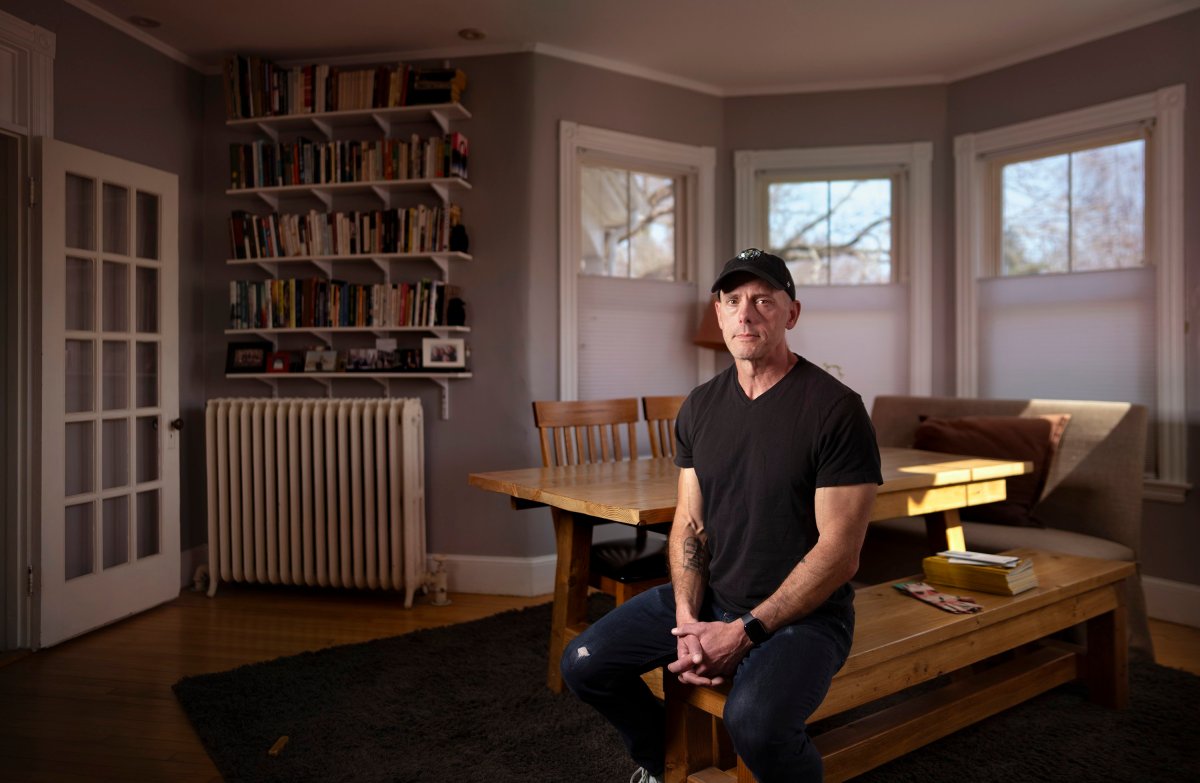
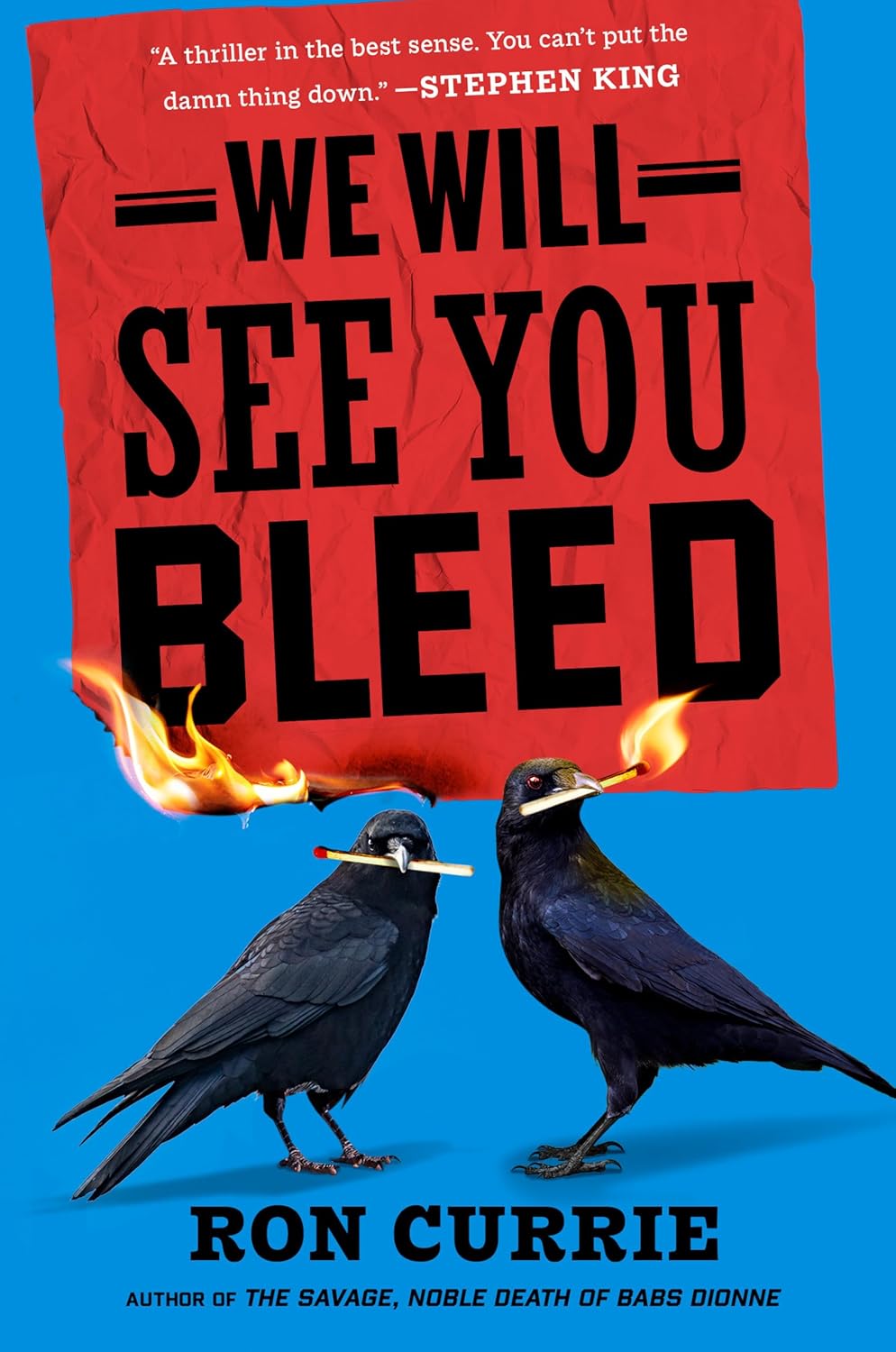
The title of Portland-based writer Ron Currie’s 2025 novel, “The Savage, Noble Death of Babs Dionne,” would not suggest to most readers that a sequel was on the way. And yet, just over a year later, Currie has returned to the scene of the many crimes detailed in his previous book with “We Will See You Bleed,” a novel that revisits many of the characters — including the unlikely crime boss, Babs Dionne.
Set over a handful of days in 1984 as the Franco-American community in Waterville strikes at the local paper mill, “We Will See You Bleed” is both a fascinating return to the milieu of his earlier novel and something of a stylistic departure, a novel that finds a different way to reckon with some of the same themes as its predecessor.
Dionne discussed the two novels, what his future plans are for this setting and his work on Netflix’s adaptation of “The Savage, Noble Death of Babs Dionne.”
When did you first realize that ‘The Savage, Noble Death of Babs Dionne’ would not be the last word on these characters and this setting?
I knew as I wrote the first book that it had a mythic feel to it; it had sprawl. I think that that’s related to two things. It’s the nature of multi-generational family stories that they tend to sprawl, in a good way. And sometimes characters refuse to leave you alone.
It’s not just the individual characters but their relationships that keep harassing you to fully explore who people are to one another over time. The ways in which we put on and take off versions of ourselves, depending on the situation and across time is really interesting to me. We behave differently around our parents than we do around our buddies, and we behave differently around our bosses than we do around our parents.
The Sept. 11th attacks and war in the Middle East factor into the first novel. Here, the historical backdrop relates to the 1980s: the beginnings of deindustrialization and the status of organized labor. It also plays out over a more compressed timeframe. Were those contrasts something you had planned from the outset?
I’m very much an intuitive writer. When I’m having the best time as a writer, it’s when the story is telling me where it wants to go. In this case with the paper mill strike, there are a lot of circumstances important to this story that occur outside of the frame. The strike’s been going on for a year and a half. I based the strike in the book on a real-life strike that happened in Jay, Maine in 1987. It went on for 18 months and at the end of it, everybody got fired. To this day, it is infamous in labor circles.
This book also features a couple of appearances from real people, including Jesse Jackson, Cardinal Law and Ronald Reagan. Was it especially challenging to write about public figures in this book?
The great thing, in my experience, about writing about well-known real people is that you can still fictionalize the hell out of them if you want to. Part of the reason Jesse Jackson makes that appearance at a labor rally is because that happened during the Jay strike. I lifted a lot of his dialogue in that scene from an actual speech that he made when he was running for the Democratic primary in 1987.
When Jackson died, the media covered that aspect of his presidential run. The thrust of that coverage was, here was this guy who came to Maine to support a labor strike that was exclusively white people. He ended up garnering a ton of support, including donations from people who hadn’t worked in over a year, simply because he made the case that people should be organizing along class lines. It made a lot of sense to the audience, and I can remember even as a kid that made a lot of sense to me.
There was a place in the novel where I found myself surprised that some of the characters were making a case for organized crime as an alternative to predatory capitalism. By the end of the book, they learn that that has its drawbacks as well. What were the challenges of writing about the role of morality in this story?
Part of what ails us culturally right now, I think, is an insistence that everything is simple. Nothing is complicated. It’s very much a binary. I do think that one can make a convincing case that organized crime as such is a response to things like capital-C Capitalism — or, more generally, the abdication of governmental responsibility. I don’t think a reasonable, intelligent person could say, no, that’s absolutely not true.
At the same time, organized crime comes with some problems, right? I feel the same way about labor unions. I’m a big proponent of labor unions. I’m a union guy myself, like my father before me, but are they perfect? Not by a long stretch. It also seems to me that we live at a time when people are determined to allow the perfect to be the enemy of the good. Are labor unions perfect? No. Are they the only entities that have ever done anything for working class people in this country? Yes. And as such, can we accept and work on the imperfections? I think we probably should.
You’re working on an adaptation of the first novel. How is that going — and what is it like to be working on that as you’re telling other stories with the same characters in your fiction?
I’ve never had an experience like this as a writer where I parked myself in a particular world with a particular set of characters for as long as I have with these people. The quality of the work and the quality of the feeling that I have while doing the work is very different from anything I’ve done before, in a good way. It feels good to stay in the same place.
Ultimately, I think it was Flannery O’Connor who said that if you live to be 18, you’ve got enough material to last a lifetime. But I also think it’s true that for whatever reason, those formative years have an outsized presence in my work, whatever my thematic preoccupations are. I feel like everything that I write, at least with regards to fiction, is really just a version of the same story. You’re trying to get that one thing right, you know, and you never quite accomplish it. So it’s nice to be able to stay here. It’s a world that I miss, and it’s a world that I’m comfortable in. As a human being, I like being here.
New York City resident Tobias Carroll is the author of five books, most recently the novel, “In the Sight.” He has reviewed books for The New York Times, Bookforum, the Star Tribune and elsewhere.
We invite you to add your comments. We encourage a thoughtful exchange of ideas and information on this website. By joining the conversation, you are agreeing to our commenting policy and terms of use. More information is found on our FAQs. You can update your screen name on the member's center.
Comments are managed by our staff during regular business hours Monday through Friday as well as limited hours on Saturday and Sunday. Comments held for moderation outside of those hours may take longer to approve.
Join the Conversation
Please sign into your CentralMaine.com account to participate in conversations below. If you do not have an account, you can subscribe here. Questions? Please see our FAQs.