
The Ammonoosuc Ravine Trail rises beside waterfalls and mountain streams before making its steep climb into the alpine zone of New Hampshire’s Presidential Range.
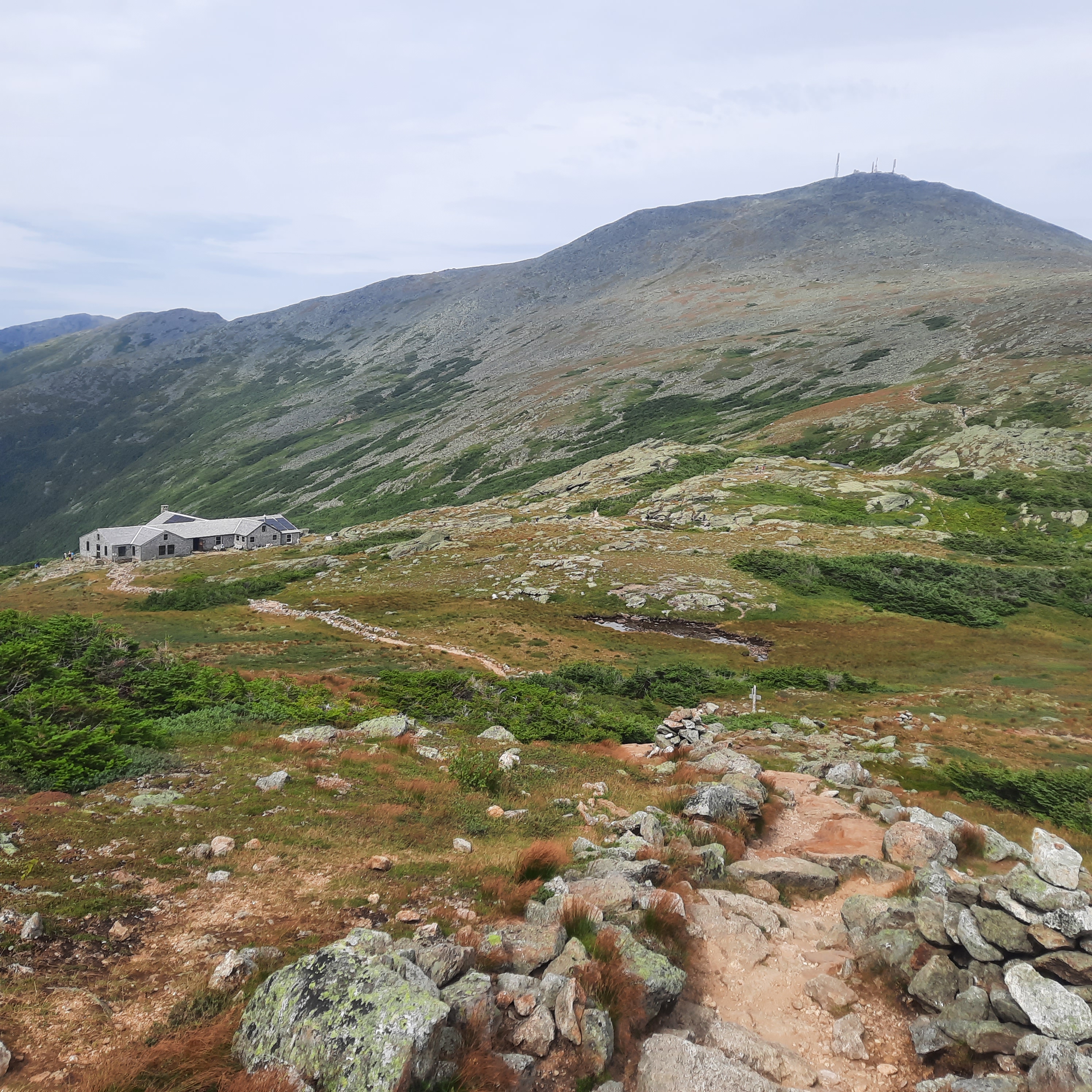
It was a beautiful day when we followed it to Lakes of the Clouds Hut, tucked between Mount Washington and Mount Monroe. Dark-eyed juncos seemed to be everywhere around the lakes. We watched them fly out of the low shrubs along the sides of slabs of rock, then disappear back into the vegetation. A moment later, we could hear tiny bird noises coming from inside, revealing nests hidden among the alpine plants. We reached the hut with enough daylight left to climb Mount Monroe before dinner.
I was also watching the smaller things.
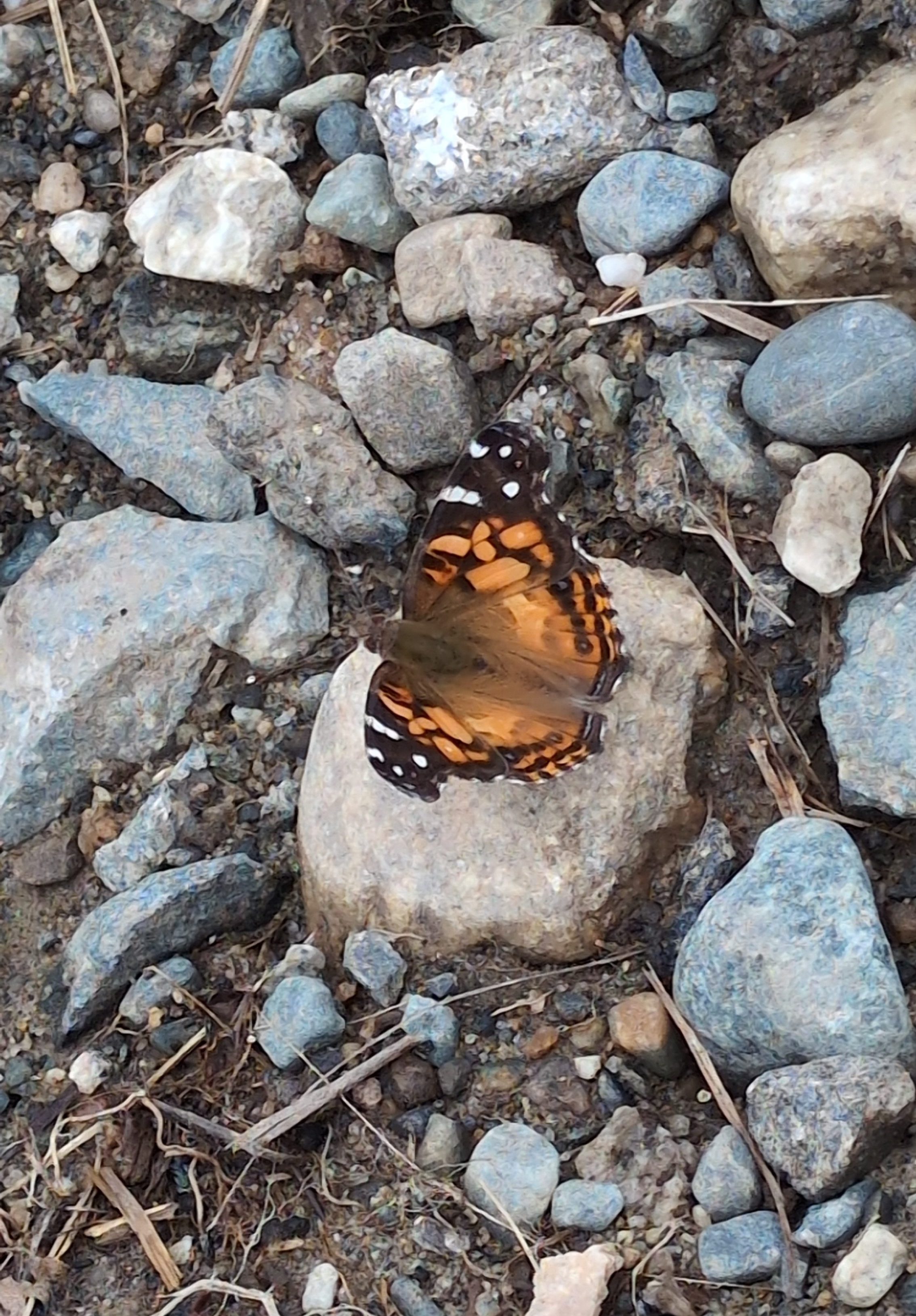
I saw a colorful butterfly on our descent on the Cog Access trail on our final day that I thought might be a painted lady, a mottled moth that looked remarkably like the rock it rested on and a tiny white moth-like insect. I was less interested in putting names to them than in finding two butterflies I knew lived somewhere in these mountains.
I did not find either one.
The next day was supposed to be our butterfly day, a chance to spend more time looking around the alpine zone. Instead, the weather changed and rain kept us in.
As the clouds closed in, Lakes of the Clouds Hut went from holding us, a few other hikers and the croo (hut staff) to a crowded refuge. After a much-deserved nap, we woke to find roughly 90 people settled in for the 6 p.m. dinner. Somehow, I had slept through dozens of hikers arriving, along with the banging and yelling that accompanied the dinner announcement.
The rain did more than keep us inside. For these butterflies, weather can determine whether they fly at all.
The endangered White Mountain fritillary and threatened White Mountain arctic survive in different alpine habitats in New Hampshire’s Presidential Range, while the endangered Katahdin arctic is known only from Maine’s Katahdin. Their isolation helped create butterflies found almost nowhere else, but it also leaves them especially vulnerable to changing climate, damaged habitat and, in one notorious case, collectors.
A butterfly of snowbanks
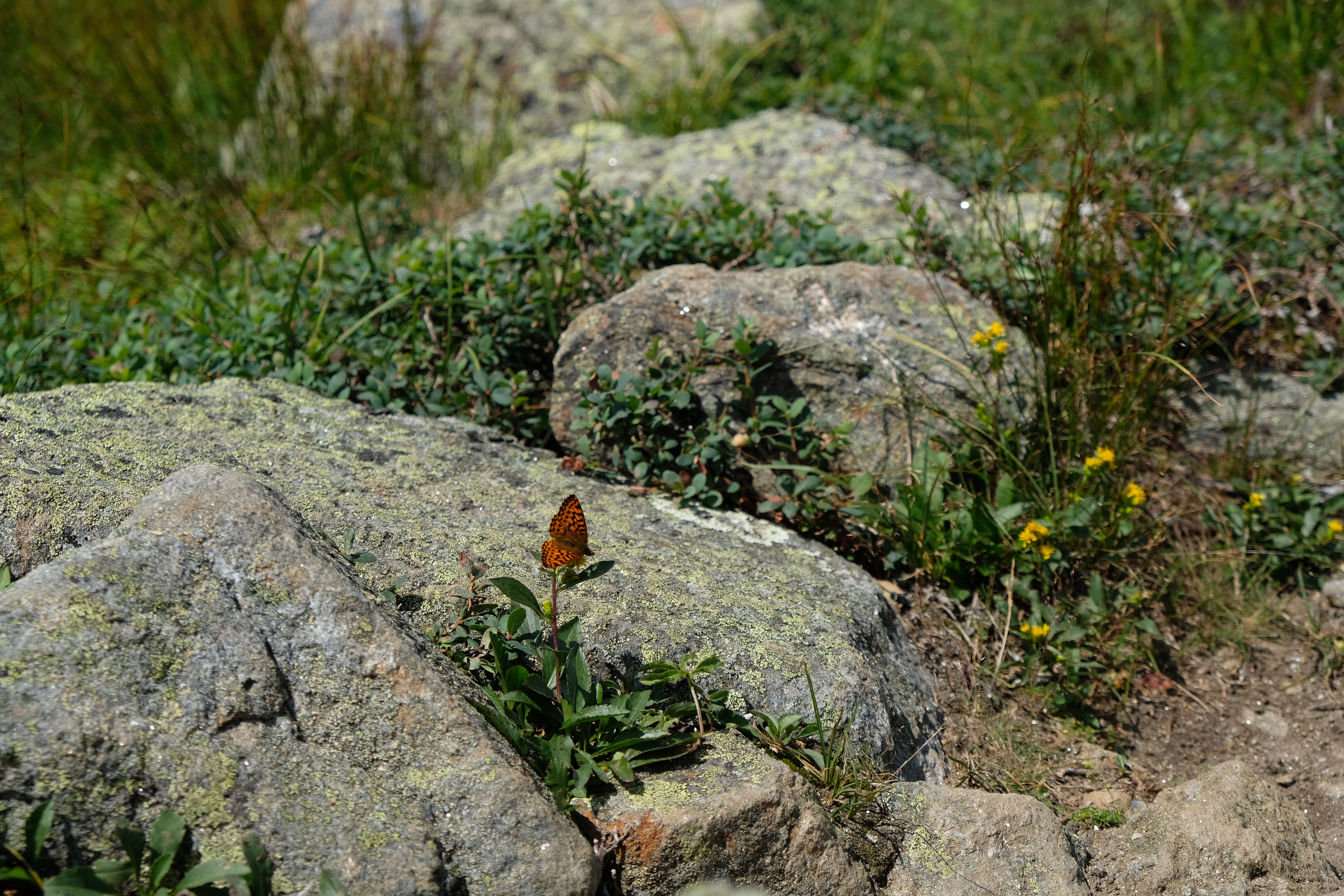
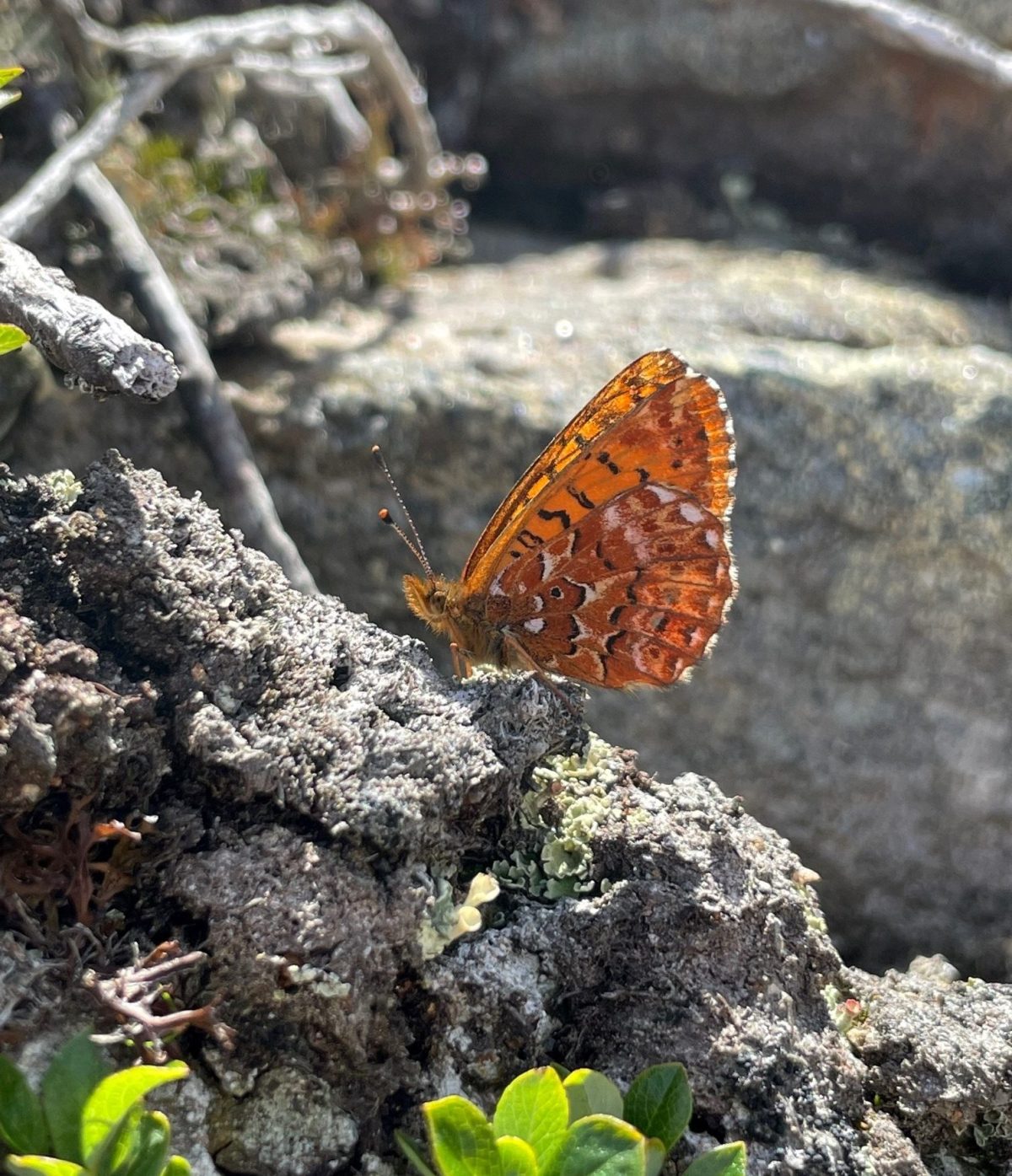
The White Mountain fritillary, Boloria chariclea montinus, is an endangered New Hampshire butterfly restricted to the alpine zone of the White Mountains. New Hampshire Fish and Game describes its range as extremely limited.
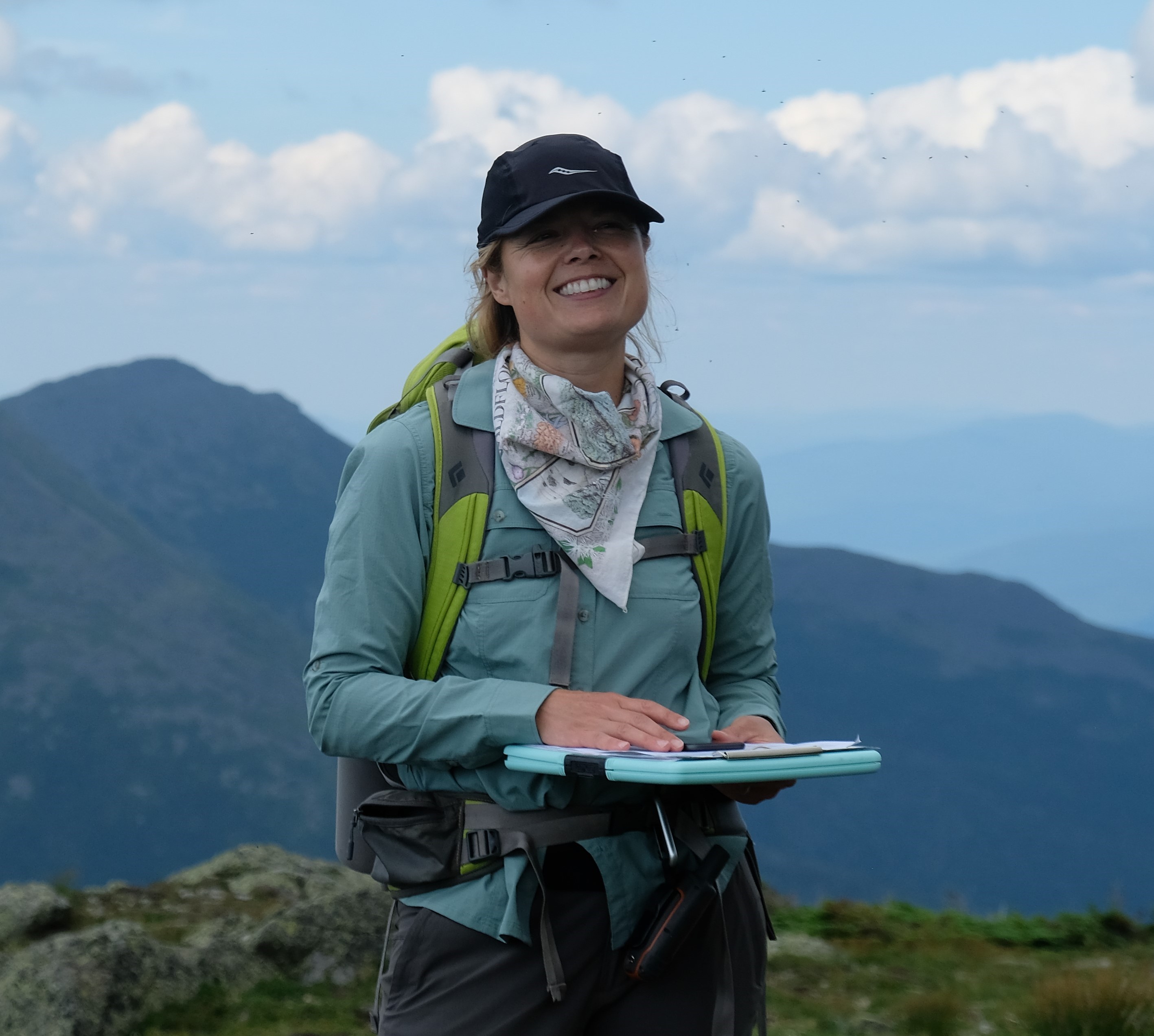
Heidi Holman, a wildlife biologist with the New Hampshire Fish and Game Department, said the fritillary is found on several summits in the Presidential Range.
“They are associated with snowbank communities, stream and other wet areas,” Holman said in written responses to questions about the species.
The caterpillars use tea-leaved willow, dwarf bilberry and violet as food plants, Holman said. In the wild, the areas occupied by fritillaries often contain moss and become buried beneath deep snow, potentially insulating the insects from the severe wind and cold above treeline.
A White Mountain fritillary also does not necessarily go from egg to butterfly between one spring and the next.
“These butterflies can take up to two summers to complete their life cycle,” Holman said.
That long life cycle makes conditions over more than one season important.
Holman listed climate change, shifting snowpack, midseason melting and changes in wind and sun conditions during the adult flight period as being among the pressures facing the species.
Even a summer that looks merely gloomy to a hiker can matter to a butterfly.
“If there are years of lots of rain and clouds the butterflies may fly less and mate less often,” Holman said. “It’s very hard to count butterflies accurately when this occurs as well.”
There is encouraging news, too.
Recent work included developing captive-rearing techniques and collecting DNA to examine connectivity among White Mountain fritillary populations. Holman said the population “appears to be healthy” and does not appear to be suffering from isolation of individuals among the peaks.
Higher, windier and harder to see
The White Mountain arctic, Oeneis melissa semidea, shares the Presidential Range with the fritillary but occupies a different neighborhood.
New Hampshire considers the butterfly threatened. It is a small, mottled brown and gray species found in alpine sedge meadows around Mount Washington and Mount Jefferson.
Holman said the arctic lives in “limited large sedge meadows at a slightly higher elevation” than the fritillary. Its caterpillars feed on Bigelow’s sedge.
Although the two butterflies can live on the same mountain, they are not simply sharing the same patch of tundra.
“They are generally separated,” Holman said. “Their host plants don’t overlap really.”
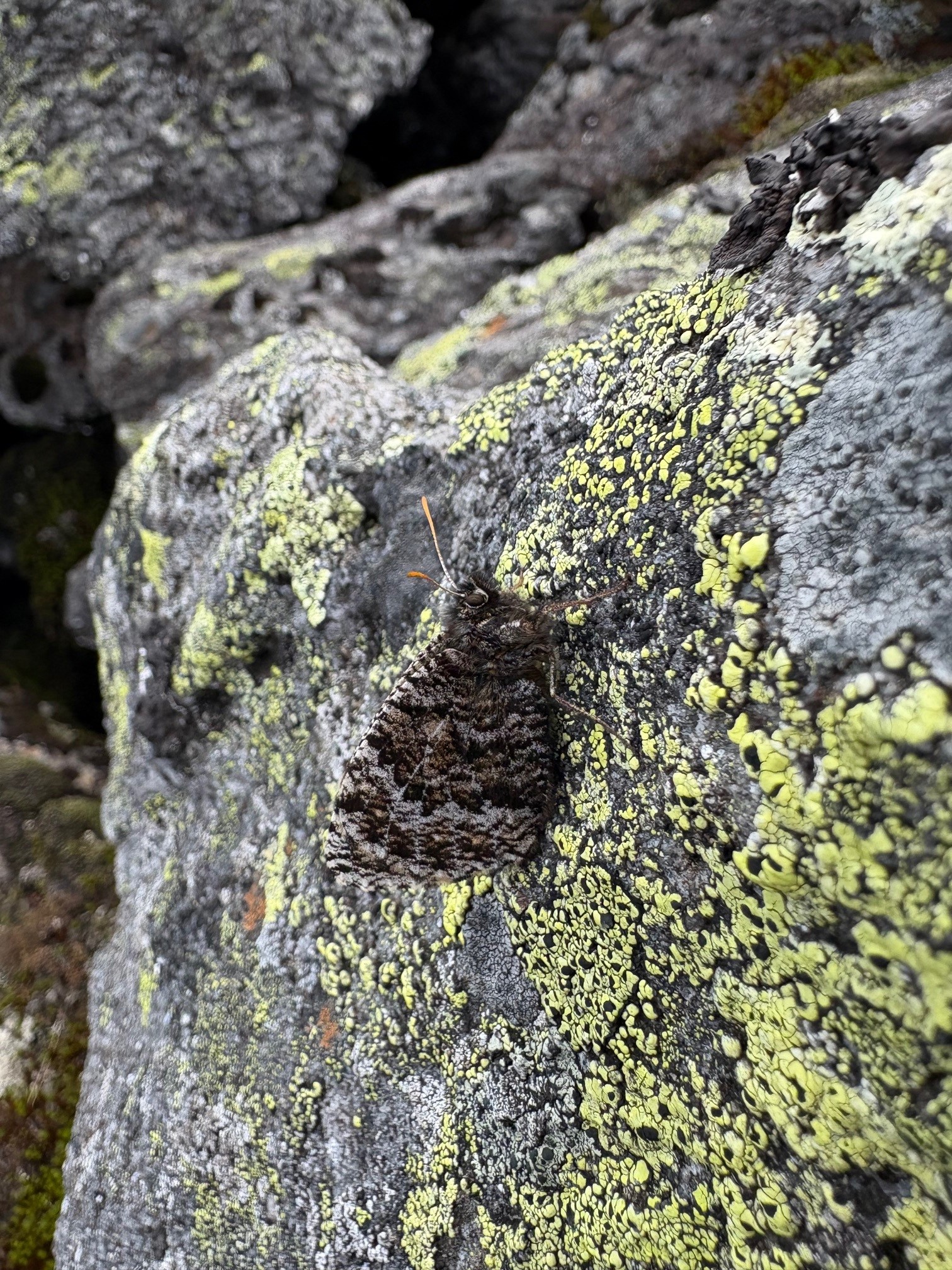
The arctic can also be much harder to spot.
“They are more cryptic in their appearance,” Holman said. “They are conservative with flight due to winds, they dive and hide in the rocky slopes,” or fell fields.
Its caterpillar may spend years living through the mountain’s short summers and long winters.
“This species doesn’t seem to ever complete its life cycle in one year,” Holman said. “It is the slowest growing caterpillar I have worked with.”
After becoming an adult, it still has to contend with Mount Washington weather.
“The conditions when it flies as an adult are pretty harsh as well,” Holman said. “June is very cloudy and windy, there are rime ice and snow events that occur, but once the sun shines and things warm up they seem to fly!”
Suddenly, our rainy butterfly day at Lakes of the Clouds made a little more sense.
You can be standing on the right mountain, at approximately the right time of year, and still have very little chance of seeing one.
A butterfly with one mountain
About 170 miles to the northeast is another alpine butterfly with an even more restricted home.
The Katahdin arctic, Oeneis polixenes katahdin, is listed as endangered in Maine. Maine wildlife officials describe it as endemic, meaning it is found nowhere else in the world. Its known habitat is the alpine tundra of Katahdin in Baxter State Park.
The Maine Natural Areas Program says heath alpine ridge on Katahdin’s tablelands provides the only known habitat in the world for the butterfly.
That makes the scale of its world difficult to ignore.
A deer can walk into another valley. A migratory bird can fly hundreds or thousands of miles. The Katahdin arctic has a mountaintop.
Maine’s current Wildlife Action Plan calls for better population monitoring, more research into the butterfly’s life history, surveys for any undiscovered populations and monitoring of tundra damage from off-trail recreation. It also calls for public education about the butterfly and its fragile alpine habitat.
Maine wildlife officials also identify high-elevation ecosystems such as Katahdin as isolated “sky island” habitat whose wildlife is threatened by climate change.
For an alpine animal, warming presents a particularly simple geographic problem.
There is only so much mountain above it.
The butterfly poachers
Climate and trampling are not the only threats these insects have faced.
The history of the Katahdin arctic includes one of the stranger wildlife crimes in Maine.
In 1992, a U.S. Fish and Wildlife Service investigation turned up 37 mounted Katahdin arctic butterflies in the hands of three collectors involved in the illegal trade and sale of rare and protected butterflies. Baxter State Park naturalist Jean Hoekwater later documented the case in a 1997 article, “Butterfly Poaching for Profit in Baxter State Park, Maine.”
Two men involved in the broader butterfly-trafficking investigation were sentenced to federal prison and fined in 1995. A later U.S. Fish and Wildlife Service Federal Register notice cites a 1995 Department of Justice release concerning prison sentences for illegal smuggling of endangered and protected species in connection with the investigation.
Thirty-seven butterflies might not sound like many. But the Katahdin arctic is found only in a tiny alpine area on Katahdin, making the removal of even a relatively small number significant.
The case is also a reminder of the distinction between legitimate scientific collecting and taking rare wildlife for private collections or sale. Specimens preserved in scientific collections can provide valuable research material, but removing a rare butterfly from an exceptionally restricted population carries a very different consequence.
For the Katahdin arctic, protecting the population means protecting the mountain habitat where it survives.
The best way to look
The easiest way for hikers to prevent damage is also the most mundane: Consider where we put our feet.
Alpine plants survive cold, wind, ice and a growing season measured in weeks. They should not also have to survive thousands of hiking boots wandering away from trails.
I asked Holman what message she would most want children to understand about walking gently in the alpine zone.
Her answer was straight to the point. Stay on established trails or walk on rocks rather than alpine vegetation.
It is probably the best butterfly-searching advice for adults, too.
Look. Wait. Photograph one if you are lucky enough to see it.
But do not trample the habitat trying to find it.
I went into the Presidential Range hoping to see one of its rare butterflies. Instead, I saw juncos hopping around Lakes of the Clouds, what appeared to be a painted lady butterfly, a moth almost invisible against stone and another tiny white insect that remains a mystery.
Then the clouds came in and the rain kept us inside.
I did not find a White Mountain fritillary or White Mountain arctic.
Knowing what it takes for them to live up there, I am less disappointed by that now.
Somewhere among those wet snowbank communities, sedge meadows and wind-battered rocks are caterpillars growing extraordinarily slowly through another mountain season. When the weather finally gives them sun, warmth and a little less wind, some will become butterflies.
You just have to be lucky enough to be there when they fly.
Rebecca Richard is an award-winning staff writer for the Maine Trust for Local News.
We invite you to add your comments. We encourage a thoughtful exchange of ideas and information on this website. By joining the conversation, you are agreeing to our commenting policy and terms of use. More information is found on our FAQs. You can update your screen name on the member's center.
Comments are managed by our staff during regular business hours Monday through Friday as well as limited hours on Saturday and Sunday. Comments held for moderation outside of those hours may take longer to approve.
Join the Conversation
Please sign into your CentralMaine.com account to participate in conversations below. If you do not have an account, you can subscribe here. Questions? Please see our FAQs.